
6 2 volleyball rotation pdf
Understanding the 6-2 Volleyball Rotation
The 6-2 rotation favors teams with more hitting options, allowing advanced hitters to substitute into the front row. Two setters exclusively set from the back row, enhancing offensive versatility.

What is the 6-2 Rotation?
The 6-2 rotation is a volleyball system distinguished by utilizing two dedicated setters who participate in the attack when rotating to the front row. Crucially, these setters only set when positioned in the back row, strategically substituting out when moving to the front. This allows for a consistent setting presence from the backcourt and maximizes hitting options.
This rotation is particularly beneficial for teams possessing two capable setters and desiring increased offensive firepower. It differs from the 5-1, which relies on a single setter for all rotations, and the 4-2, which has setters setting from both front and back rows. The 6-2 prioritizes having a hitter always available in the front row.
Key Characteristics of the 6-2 System
The 6-2 system’s defining trait is the consistent presence of a setter in the back row, ensuring reliable setting opportunities. This is achieved through strategic substitutions, swapping setters when they transition to the front row. This system inherently increases hitting options, allowing teams to deploy stronger attackers more frequently.
Furthermore, the 6-2 demands precise timing and communication during substitutions to avoid disruption. It’s a rotation that thrives on offensive versatility and requires players to understand their roles within the shifting lineup. Clockwise rotation is fundamental, triggered upon winning a side-out.
Teams Best Suited for a 6-2 Rotation
The 6-2 rotation particularly benefits teams possessing two capable setters and a surplus of strong hitters. It’s ideal when a team wants to maximize offensive firepower by consistently getting their best attackers involved. Teams lacking a single, dominant setter can also thrive, distributing setting responsibilities effectively.
However, it’s less suitable for teams with limited substitution options or those new to complex rotational systems. A 6-2 requires players who are adaptable and comfortable with frequent lineup changes. Strategic flexibility is key, allowing coaches to optimize matchups and maintain offensive pressure.

Player Roles in a 6-2 Rotation
In a 6-2 system, two dedicated setters share duties, while hitters specialize as outside, middle, or opposite attackers, and a libero focuses on defense.
The Two Setters
The core of the 6-2 lies in utilizing two setters, each responsible for setting when positioned in the back row. This arrangement ensures a consistent setter is available for every attack, maximizing offensive opportunities. Crucially, these setters typically substitute out when rotating to the front row, allowing stronger hitters to take their place. This strategic substitution is fundamental to the 6-2’s effectiveness.
Effective communication between the setters is paramount for seamless transitions and avoiding confusion during substitutions. They must anticipate rotations and coordinate their movements to maintain a consistent offensive flow. A successful 6-2 hinges on the setters’ ability to execute precise sets and manage the team’s offensive rhythm.
The Hitters (Outside, Middle, and Opposite)
In a 6-2 system, hitters – outside, middle, and opposite – benefit from the increased hitting options created by frequent substitutions. The rotation allows for strategically placing stronger attackers in the front row, particularly when the setters are rotating out. Outside hitters maintain consistent attacking roles, while the middle blocker focuses on blocking and quick attacks.
The opposite hitter’s role is particularly dynamic, often substituting for a setter when they move to the front row. This ensures a powerful attacker is always present. Effective hitters must adapt to varying set locations and tempos, capitalizing on the opportunities presented by the two-setter system.
Libero’s Role in the 6-2 System
The libero’s function remains crucial in the 6-2 rotation, primarily focused on serve receive and defensive skills. They provide a stable passing platform, enabling the setters to efficiently run the offense. While the setters rotate through the front row, the libero consistently supports the back-row defense, covering tips and maintaining ball control.
Effective communication between the libero and the setters is paramount, ensuring seamless transitions during rotations. The libero’s ability to read the opposing team’s attacks and deliver accurate passes is vital for maximizing the hitting opportunities created by the 6-2 system’s offensive flexibility.

Rotation Sequence Explained
Players rotate clockwise each time their team wins a rally while serving (sides-out). This continuous movement ensures all players cycle through each position on the court.
Clockwise Rotation Principle
The fundamental principle governing the 6-2 rotation, and volleyball rotations generally, is a consistent clockwise movement of players around the court. Every instance a team successfully gains a point while serving – achieving a “side-out” – initiates this rotation. Players shift one position to the right, ensuring everyone experiences the diverse demands of each court location.
This systematic progression isn’t arbitrary; it’s crucial for balanced gameplay and strategic positioning. Understanding this clockwise flow is paramount for players to anticipate their responsibilities and seamlessly transition between roles, maximizing team efficiency and minimizing confusion during fast-paced rallies.
Side-Out and Rotation Trigger
A “side-out” – winning a point while the opposing team served – is the sole trigger for rotation in volleyball, including the 6-2 system. This means players don’t rotate after losing a rally on their own serve. Successfully defending and scoring shifts the serving advantage and simultaneously initiates the clockwise rotation of all players on the court.
This rule ensures fairness and prevents a team from strategically manipulating rotations to gain an advantage. Each successful defensive play and point earned while receiving a serve propels the team into a new rotational alignment, demanding adaptability and strategic awareness from every player.
Visualizing the 6-2 Rotation Flow
Imagine a continuous clockwise movement of players after each side-out. The two setters begin in the back row, setting only when positioned there. As they rotate to the front row, they are substituted for hitters, maintaining consistent back-row setting. This substitution pattern is crucial for the 6-2’s effectiveness.
Understanding this flow requires visualizing the constant exchange between setters and hitters. Diagrams are incredibly helpful, illustrating how players transition positions with each point won. Mastering this visual understanding is key to executing the 6-2 rotation smoothly and maximizing its strategic benefits.

Substitutions in the 6-2 Rotation
Setter substitutions are vital in the 6-2, ensuring a setter is always in the back row. Opposites also rotate, maximizing hitting power and strategic flexibility.
The Importance of Setter Substitutions
Setter substitutions are absolutely crucial within the 6-2 rotation system. Because setters typically aren’t strong front-row attackers, they are strategically substituted out when rotating to the front row. This ensures a consistent offensive threat and maintains a powerful hitting presence.
A key aspect is running a “true 2-sub 6-2,” utilizing both setters and opposites for rotations. However, teams must be mindful of substitution limits; once all six substitutions are used, the lineup remains fixed for the remainder of the set. Therefore, careful planning and timing of setter changes are essential for sustained offensive effectiveness and strategic adaptability throughout the game.
Opposite Hitter Substitutions
Opposite hitter substitutions are equally vital in a successful 6-2 rotation. Similar to setters, opposites are often substituted in to bolster the front-row attack when the setter is rotating to the back row. This provides a strong offensive counterpoint and prevents a predictable offensive pattern.
The strategy revolves around maximizing hitting power and minimizing defensive weaknesses. Utilizing a dedicated opposite hitter allows for a more balanced attack. However, teams must carefully manage substitutions, as reaching the substitution limit locks the lineup, impacting flexibility. Strategic opposite hitter changes are key to maintaining offensive momentum and adapting to the opponent’s defense.
Managing Substitutions to Maintain Offensive Strength
Effective substitution management is crucial in the 6-2, particularly as substitution limits loom. A “true 2-sub 6-2” involves rotating both setters and opposites, quickly exhausting all six substitutions. Once this limit is reached, the lineup remains fixed for the rest of the set, eliminating tactical flexibility.
Therefore, coaches must strategically time substitutions to maximize offensive impact while preserving options. Careful consideration of score, momentum, and opponent weaknesses is essential. Prioritizing key offensive players and anticipating late-set scenarios are vital for maintaining a strong attack and adapting to changing game dynamics.

Advantages of the 6-2 Rotation
The 6-2 system provides increased hitting options and consistent setting from the back row, offering strategic flexibility for diverse offensive plays and adaptability.
Increased Hitting Options
A key benefit of the 6-2 rotation lies in its ability to maximize hitting potential. By utilizing two setters, teams can strategically substitute stronger hitters into the front row when the setters rotate to the back. This allows for a more powerful offensive presence, particularly when facing weaker blocking opponents. The system effectively enables coaches to consistently feature their most effective attackers, creating mismatches and increasing scoring opportunities.
Furthermore, the 6-2 allows for specialized substitutions, bringing in taller or more skilled hitters without compromising setting consistency. This dynamic approach keeps the opposing team guessing and disrupts their defensive strategies, ultimately leading to a more unpredictable and effective attack.
Consistent Setting from the Back Row
The 6-2 rotation is specifically designed for consistent setting from the back row. Unlike systems where setters must transition to front-row hitting positions, 6-2 setters remain in the back, focusing solely on delivering accurate sets. This specialization minimizes setting errors and maintains offensive flow, as the setters aren’t divided between setting and attacking responsibilities.
This consistent back-row setting allows hitters to develop strong timing and rhythm, knowing they’ll consistently receive a set from a dedicated setter. It also simplifies offensive schemes, enabling hitters to anticipate set locations and execute attacks with greater precision and power, ultimately boosting overall team performance.
Strategic Flexibility
The 6-2 rotation provides significant strategic flexibility through its substitution patterns. Teams can strategically insert stronger hitters or blockers into the front row when needed, maximizing offensive and defensive capabilities. This is particularly useful when facing challenging opponents or specific hitter matchups, allowing coaches to adapt to game situations effectively.
However, running a “true 2-sub 6-2” requires careful management, as substitutions are limited after a certain score. Coaches must anticipate needs and utilize substitutions early to maintain offensive strength throughout the set. This dynamic substitution element adds a layer of tactical depth, demanding astute decision-making and proactive planning.

Disadvantages of the 6-2 Rotation
Potential drawbacks include setter disruption during substitutions, substitution limitations later in the set, and increased complexity for less experienced players to grasp effectively.
Potential for Setter Disruption
A key challenge within the 6-2 system lies in the potential disruption to offensive flow when setters rotate to the front row and are substituted. Frequent changes can momentarily impact team rhythm and communication. Maintaining consistent setting requires precise timing and seamless transitions during these substitutions.
If substitutions aren’t executed smoothly, it can lead to miscommunication or hesitation, potentially resulting in a weaker set or a missed hitting opportunity. Coaches must prioritize drills focusing on quick, efficient setter replacements to minimize this disruption and ensure offensive stability throughout the game. This is crucial for maximizing the system’s benefits.
Substitution Limitations Later in the Set
As a set progresses, the 6-2 rotation faces increasing substitution limitations. Early on, a “true 2-sub 6-2” allows for both setters and opposites to rotate freely, maximizing flexibility. However, after exhausting all six substitutions – often around a score of 15-15 – the team becomes locked with the players currently on the court.
This lack of flexibility can be detrimental if a key player struggles or if the opposing team exploits a mismatch. Careful management of substitutions is vital, balancing immediate needs with the potential for limited options later in the set. Strategic foresight is paramount for success.
Complexity for Newer Players
The 6-2 rotation, while strategically advantageous, presents a steeper learning curve for inexperienced volleyball players. Understanding the specific timing of setter substitutions, and recognizing when to enter or exit the game, requires significant court awareness and rotational knowledge. Players must quickly grasp the flow and anticipate their roles.
Compared to simpler systems like the 4-2, the 6-2 demands greater communication and coordination. Misunderstandings regarding substitutions can disrupt the team’s offensive rhythm and lead to errors. Thorough practice and clear instruction are crucial for successful implementation with less seasoned athletes.

Comparing 6-2 to Other Rotations
The 6-2 differs from 5-1 with two setters, and from 4-2 by utilizing back-row setting exclusively, offering more hitting options and strategic flexibility.
6-2 vs. 5-1 Rotation
The core difference lies in the setting responsibilities. A 5-1 rotation relies on a single setter managing all six rotations, setting from both front and back rows. Conversely, the 6-2 utilizes two setters, each dedicated to setting only when in the back row. This distinction impacts hitter matchups and substitution patterns.
A 5-1 system often suits teams with a dominant, highly skilled setter, while the 6-2 thrives with two capable setters and a desire for increased hitting power. The 6-2 allows for more frequent substitutions to bring stronger attackers into the front row, potentially overwhelming opponents, but demands precise timing and communication.
6-2 vs. 4-2 Rotation
The primary distinction between the 6-2 and 4-2 rotations centers on front-row hitting power and setter involvement. A 4-2 employs two setters who set exclusively from the back row, similar to the 6-2, but typically lacks the frequent substitutions for specialized hitters.
The 6-2, with its potential for more dynamic substitutions – often involving both setters and opposite hitters – aims to maximize offensive options. The 4-2 is simpler, potentially better for less experienced teams, while the 6-2 demands greater strategic complexity and player versatility to effectively manage rotations and substitutions.
Choosing the Right Rotation for Your Team
Selecting the optimal rotation hinges on your team’s strengths and weaknesses. If you possess two capable setters and strong offensive players benefiting from frequent front-row opportunities, the 6-2 shines. However, consider player experience; the 6-2’s complexity can overwhelm newer teams.
A 5-1 rotation suits teams with a dominant setter, while a 4-2 is simpler for developing squads. Evaluate your hitters’ abilities – can they consistently terminate? The 6-2 thrives with hitters who excel in various rotations. Prioritize a system that maximizes your team’s potential and minimizes errors.
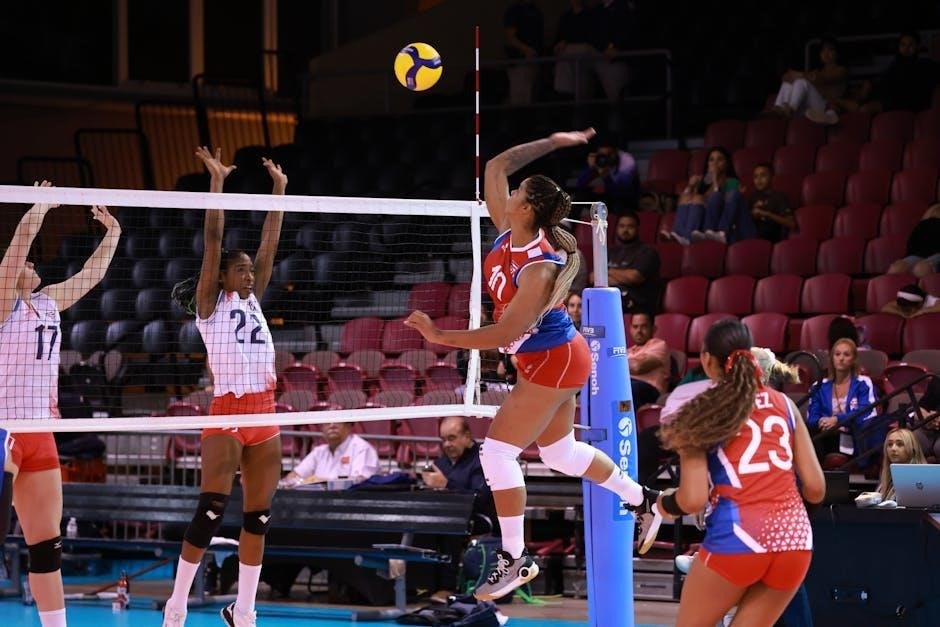
Drills to Practice the 6-2 Rotation
Effective practice involves rotation pattern drills, setter transition exercises, and hitting/blocking drills specifically designed for the 6-2 system’s unique flow.
Rotation Pattern Drills
Rotation pattern drills are fundamental for mastering the 6-2 system. Begin with a simple walk-through, having players physically move through each rotation position without a ball, emphasizing correct positioning and understanding of responsibilities. Progress to drills where players rotate after each serve, simulating game conditions.
Introduce a coach calling out rotation numbers, forcing quick reactions and adjustments. Incorporate passing and setting into the rotation, ensuring setters consistently move to the back row to set. These drills build muscle memory and reinforce the clockwise rotation principle, crucial for seamless transitions and minimizing errors during live play.
Setter Transition Drills
Setter transition drills focus on the quick movement required when one setter substitutes for the other in the 6-2. Start with drills where setters practice rapid back-row setting after a simulated front-row attack by their teammate. Emphasize efficient communication during the substitution process to avoid confusion.
Progress to drills involving a full rotation, requiring the incoming setter to immediately transition into a setting position; Include defensive responsibilities for the outgoing setter, simulating realistic game scenarios. These drills build the speed and coordination needed for smooth setter changes, maintaining offensive consistency.
Hitting and Blocking Drills within the 6-2 System
Hitting drills should emphasize varied approaches, recognizing the 6-2 provides more hitting options with substitutions. Practice hitting from both the front and back rows, adjusting to sets from different setter positions. Blocking drills must focus on reading the opposing hitters and adjusting to the changing front-row combinations created by substitutions.
Simulate game-like scenarios where hitters and blockers anticipate the setter’s location and potential set. Incorporate drills that require quick transitions between hitting and blocking assignments, mirroring the dynamic nature of the 6-2 rotation. This builds adaptability and strategic awareness.

Common Mistakes to Avoid in the 6-2
Avoid poor communication during substitutions, inconsistent setter positioning, and a lack of offensive coordination, as these disrupt the 6-2’s flow and effectiveness.
Poor Communication During Substitutions
Effective communication is paramount in the 6-2 rotation, particularly during substitutions. Failing to clearly announce intentions can lead to confusion and disrupt the team’s rhythm. Players must verbally confirm who is entering and exiting, and for what reason, ensuring everyone understands the change.
Misunderstandings can result in incorrect player positioning or a missed set, costing valuable points. Coaches should emphasize clear, concise signaling and encourage players to double-check assignments before each substitution. A breakdown in communication can negate the strategic advantages of utilizing two setters and specialized hitters, ultimately hindering the team’s performance.
Inconsistent Setter Positioning
Maintaining consistent setter positioning is crucial in the 6-2 system, as they operate primarily from the back row. Erratic movement or failure to establish a reliable setting zone can disrupt offensive flow. Setters must anticipate the pass and quickly adjust their location to deliver accurate sets to hitters.
Inconsistent positioning forces hitters to adjust their approaches, reducing their effectiveness. Coaches should drill setters on proper footwork and spatial awareness, emphasizing the importance of a stable platform for setting. Predictable setter location allows hitters to time their jumps and maximize their hitting potential, leading to a more potent attack.
Lack of Offensive Coordination
Effective offensive coordination is paramount in a 6-2 rotation, demanding seamless communication between setters and hitters. Without it, the system’s potential for varied attacks diminishes. Hitters must clearly signal their intentions, and setters need to read those signals accurately, anticipating the best setting option.
A breakdown in communication leads to missets, forcing hitters into awkward approaches or resulting in hitting errors. Regular practice focusing on setter-hitter connections, including tempo and location drills, is essential. Coordinated offensive schemes maximize hitting angles and exploit opponent weaknesses, creating a dynamic and unpredictable attack.